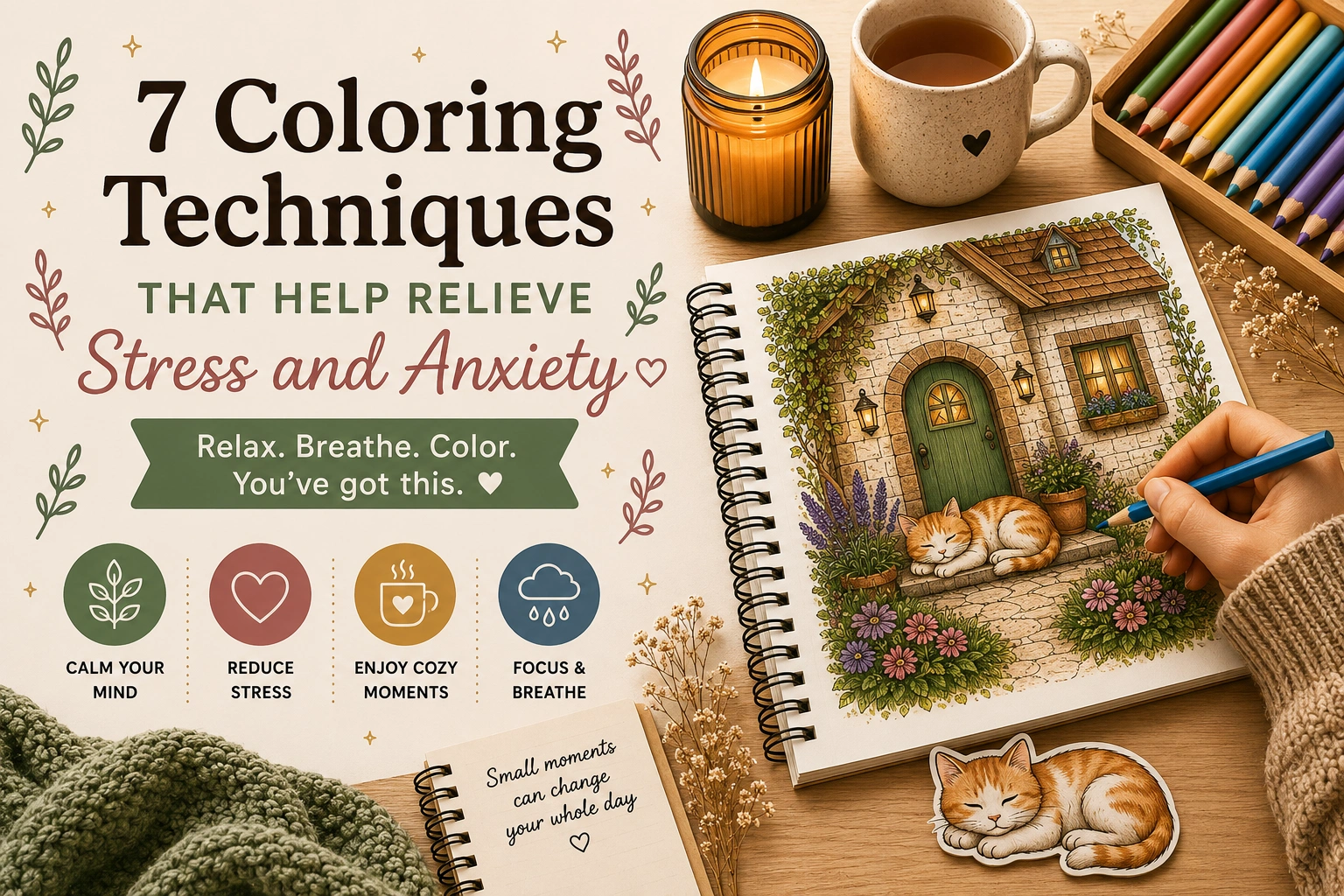
Many people naturally doodle in notebooks while thinking, listening, or feeling overwhelmed. Coloring works in a similar way. The gentle repetition of filling shapes, choosing colors, and moving the hand slowly across the page may help create moments of calm and mental quietness.
These relaxing coloring techniques are not about artistic perfection. They are about creating a softer mental space, one tiny peaceful moment at a time. You can use them with cozy printable coloring pages, adult coloring books, stress relief coloring sheets, or any simple design that feels comforting and easy to color.
Coloring is not a substitute for professional mental health care. If anxiety, burnout, panic, depression, or chronic stress affects your daily life, consider speaking with a qualified healthcare provider or mental health professional.
Coloring for Calm
Why Coloring Helps Reduce Stress and Anxiety
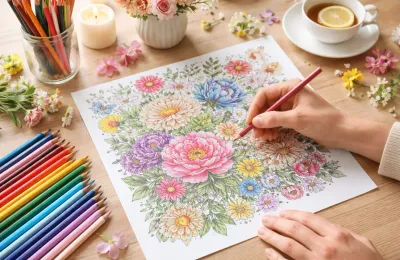
Coloring is one of the most accessible relaxation activities available to adults. Unlike many hobbies, coloring requires very little preparation, no artistic experience, and can be enjoyed almost anywhere. A printed page, a few colored pencils, and five quiet minutes can be enough to create a small pause in a busy day.
Many people use stress relief coloring pages as a simple mindfulness exercise. Focusing on colors, patterns, soft lines, and repetitive hand movements may help redirect attention away from racing thoughts, worries, and digital overload. Instead of trying to force your mind to be quiet, coloring gives it something gentle to return to.
Adult coloring pages have become popular among people looking for relaxing screen-free activities, burnout recovery routines, anxiety relief activities, and calming self-care habits. The goal is not to create perfect art. The goal is to slow down, breathe, and let your attention rest on something simple and soothing.
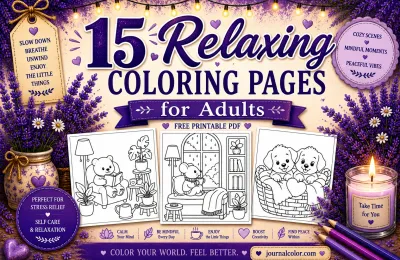
For more ideas, you can also explore our relaxing coloring pages for adults and our guide to mindfulness coloring for adults .
Research & Mindfulness
The Science Behind Coloring and Stress Relief
Coloring may seem like a simple creative hobby, but many adults use it as a practical tool for relaxation, mindfulness, and emotional balance. The act of focusing on shapes, colors, and repetitive movements encourages the mind to shift attention away from constant notifications, racing thoughts, and everyday worries.
One reason coloring feels calming is that it combines several elements often associated with mindfulness practices. As you choose colors, follow lines, and fill small areas of a page, your attention naturally returns to the present moment. Instead of replaying stressful situations or anticipating future problems, your mind becomes occupied with a simple, low-pressure activity that requires gentle focus.
Many people also find coloring easier than traditional meditation because it provides a visual task to concentrate on. Rather than trying to completely clear the mind, coloring offers a creative anchor that helps maintain attention while still encouraging relaxation. This combination of focus and creativity is one reason adult coloring books have become increasingly popular among people seeking screen-free self-care activities.
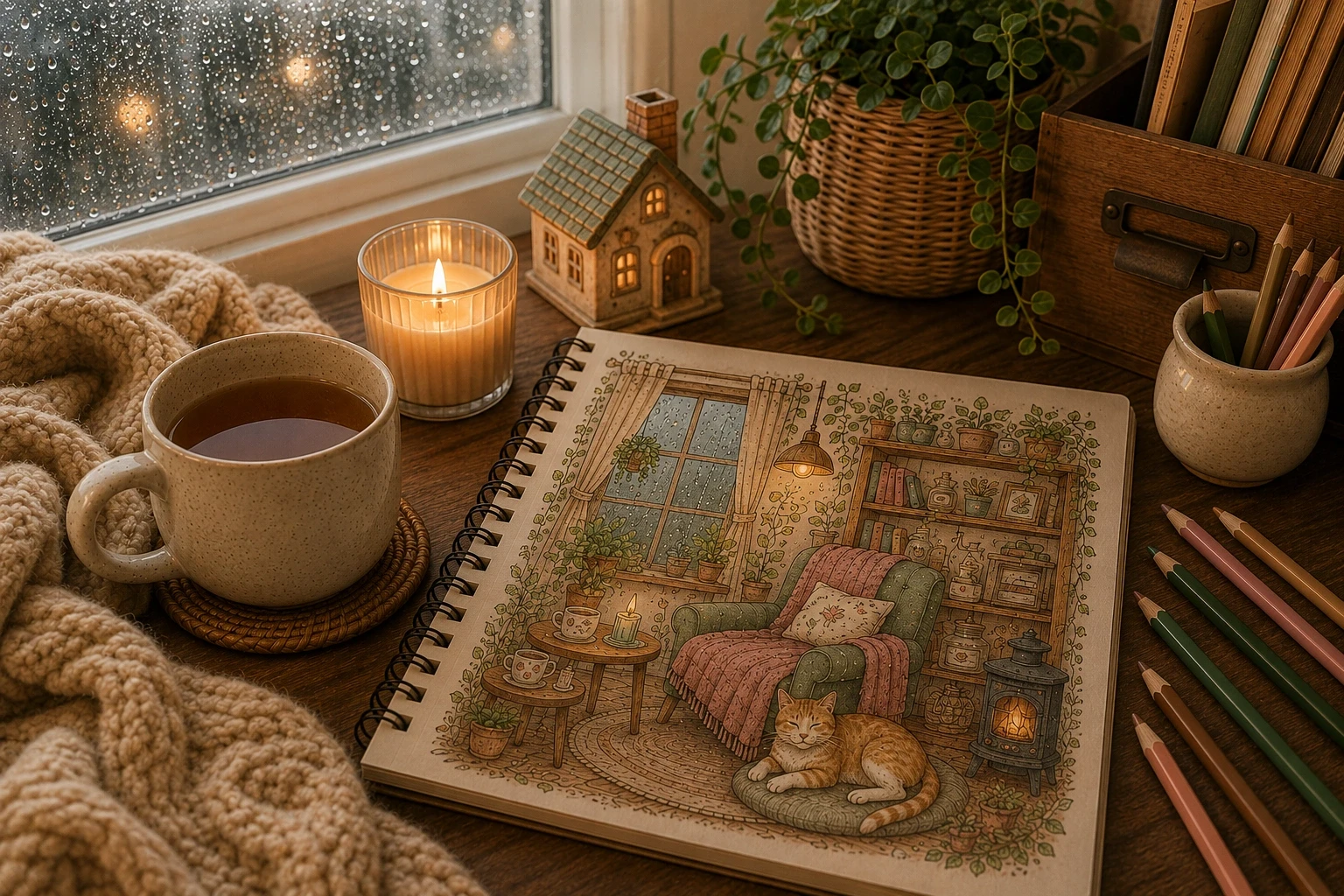
Cozy coloring pages can be particularly effective because they often feature comforting themes such as warm rooms, rainy windows, books, candles, tea cups, flowers, animals, and cottage-inspired scenes. These familiar images create feelings of safety, comfort, and emotional warmth, helping transform coloring into a calming ritual rather than a task to complete.
While coloring is not a replacement for professional mental health care, many adults incorporate printable coloring pages, coloring books, and creative hobbies into their daily wellness routines. Even ten quiet minutes of coloring can become a valuable opportunity to slow down, practice mindfulness, reduce mental overload, and reconnect with the present moment.
Gentle Self-Care
Who Can Benefit From These Coloring Techniques?
These coloring techniques are designed for adults looking for simple relaxation activities, stress management ideas, mindfulness practices, anxiety calming activities, and creative self-care routines. They can be helpful after work, before sleep, during a quiet break, or whenever your mind feels overstimulated.
Coloring may be especially useful if you want a low-pressure activity that does not require planning, performance, or screen time. Cozy coloring pages with books, candles, animals, flowers, warm drinks, rainy windows, and soft cottagecore scenes can make the experience feel emotionally safe and comforting.
If you are close to burnout, start small. Try one technique for five minutes instead of committing to a full coloring page. Tiny, repeatable rituals are often easier to keep than large self-care plans.
Best Coloring Pages for Stress Relief
Not all coloring pages feel equally relaxing. Some designs are beautiful but too detailed for a tired mind. For stress relief and anxiety reduction, many adults prefer printable coloring pages with open spaces, clear outlines, soft objects, and cozy scenes that feel easy to begin.
The best stress relief coloring pages often include peaceful interiors, cute animals, flowers, warm drinks, blankets, books, candles, mushrooms, rainy-day windows, tea tables, cottagecore corners, and gentle nature elements. These themes create a feeling of comfort and emotional warmth, making them ideal for mindful coloring exercises.
Printable coloring pages are also convenient because they can be downloaded instantly and used at home without opening another app. If your goal is relaxation, choose pages with shapes that are large enough to color slowly, but not so complex that they create pressure to finish.
Match the Page to Your Mood
Best Coloring Pages for Different Types of Stress
Stress does not always feel the same. Some days your mind may be racing with anxious thoughts, while other days you may feel mentally exhausted, overstimulated, or emotionally drained. Choosing coloring pages that match your current state can make relaxation feel easier and more effective.
The table below can help you find coloring page themes that naturally support different relaxation goals. There is no perfect choice, but many people find that certain subjects create a more calming experience depending on how they feel.
| How You're Feeling | Recommended Coloring Pages | Why They Help |
|---|---|---|
| Anxious or Worried | Simple cozy animal coloring pages | Large shapes and friendly characters help reduce visual overwhelm. |
| Mentally Overloaded | Cozy room and reading nook scenes | Organized environments encourage calm focus and gentle attention. |
| Burned Out | Cottagecore and nature-inspired coloring pages | Natural themes create a slower pace and a sense of emotional comfort. |
| Overthinking | Mandalas and repeating patterns | Repetitive coloring encourages mindfulness and present-moment focus. |
| Tired Before Bed | Rainy-day, evening, and cozy indoor scenes | Quiet themes help support a relaxing nighttime routine. |
| Emotionally Drained | Tea-time, comfort food, and seasonal cozy pages | Familiar objects and warm settings create feelings of comfort and safety. |
Remember that the most relaxing coloring page is often the one you genuinely want to color. Personal preference plays a major role in relaxation, so do not be afraid to choose themes that make you feel happy, nostalgic, curious, or comfortable. The goal is not to complete the page perfectly—it is to create a peaceful moment that helps you slow down and recharge.
Step-by-Step Guide
7 Coloring Techniques for Stress Relief and Anxiety
Try these mindful coloring methods one at a time. Each technique is simple, beginner-friendly, and designed to make coloring feel calming instead of complicated.
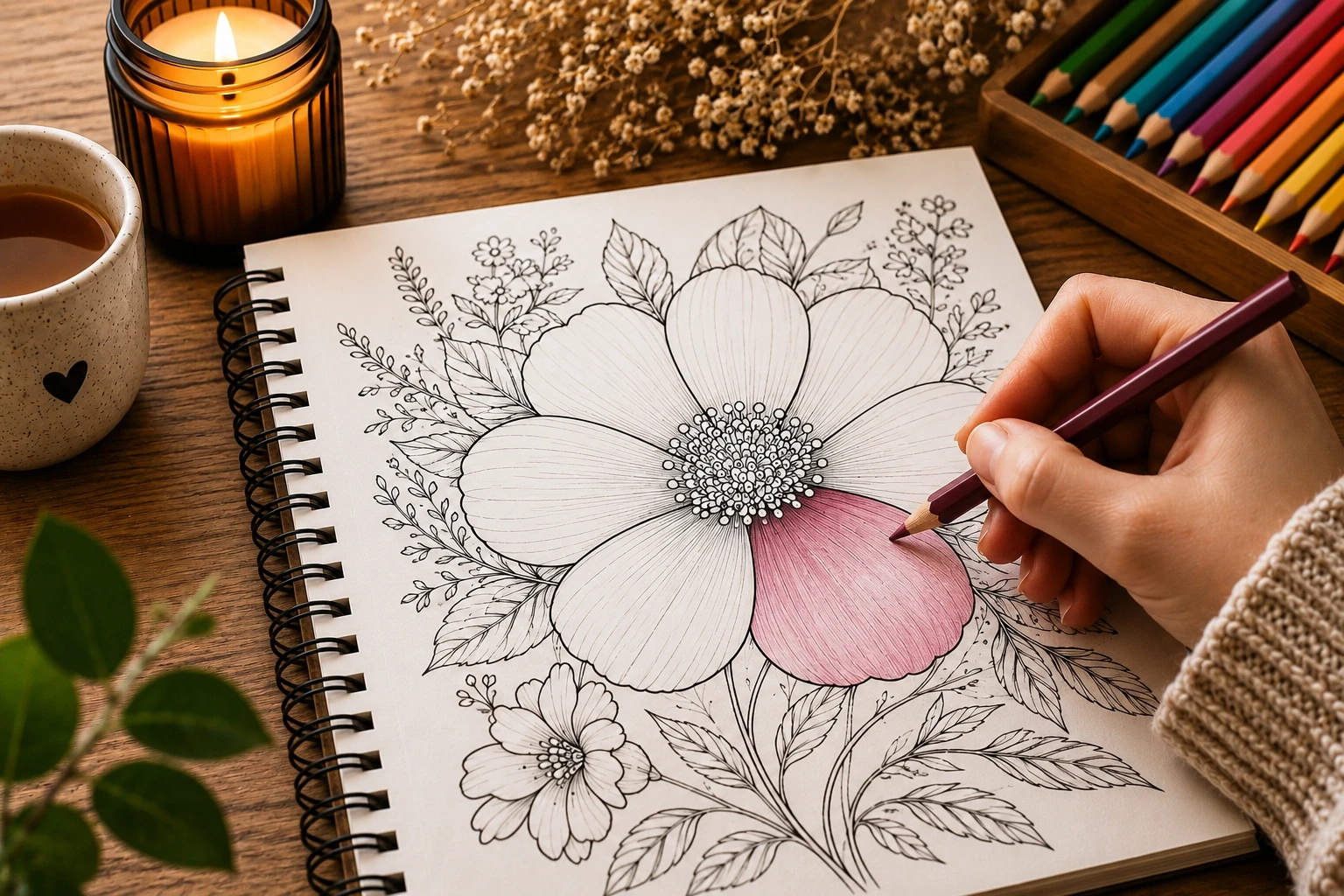
Slow Mindful Coloring
Instead of rushing to finish a page, try slowing down your movements and focusing gently on each section. Slow mindful coloring may help reduce mental noise and create a calmer rhythm for the mind.
Best for: overthinking, racing thoughts, and mental overload
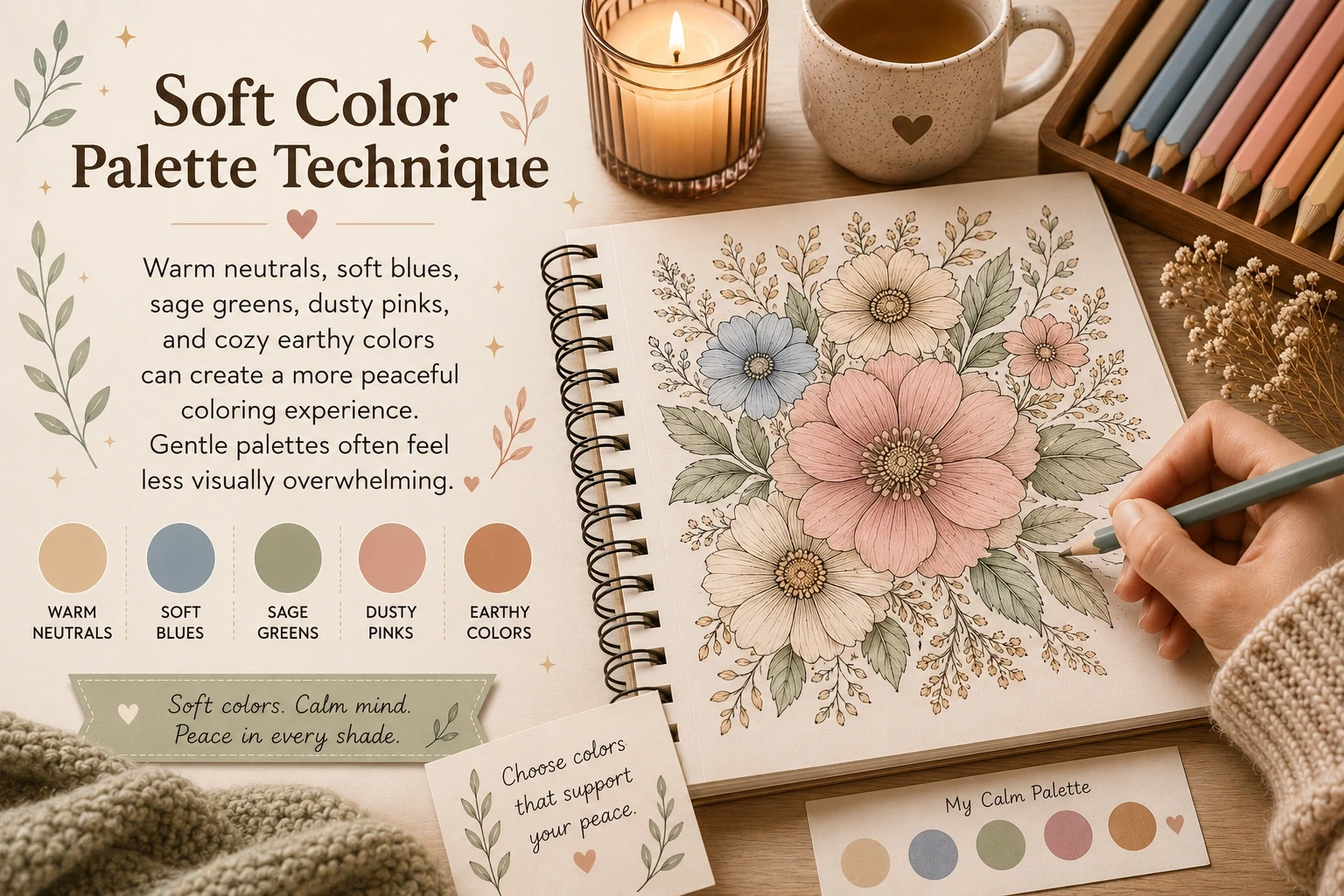
Using Soft Relaxing Color Palettes
Warm neutrals, soft blues, sage greens, dusty pinks, lavender tones, and earthy colors can create a more peaceful coloring experience. Gentle palettes often feel softer and less visually overwhelming during stressful moments.
Best for: anxiety, visual overwhelm, and evening relaxation
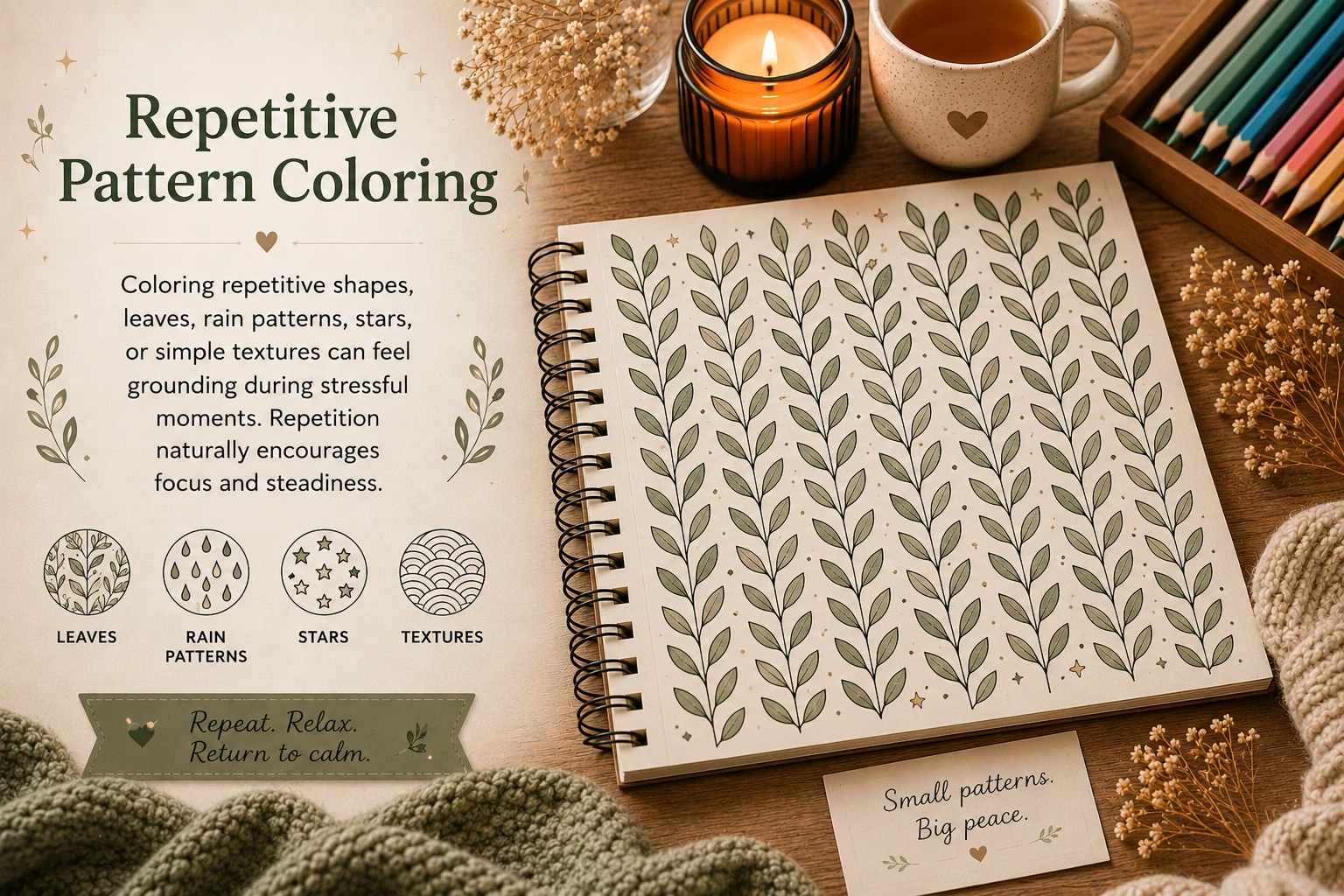
Repetitive Pattern Coloring
Coloring repetitive shapes, leaves, rain patterns, stars, or simple textures can feel grounding during stressful moments. Repetition naturally encourages focus, steadiness, and mindful attention.
Best for: focus, grounding, and calming mental clutter
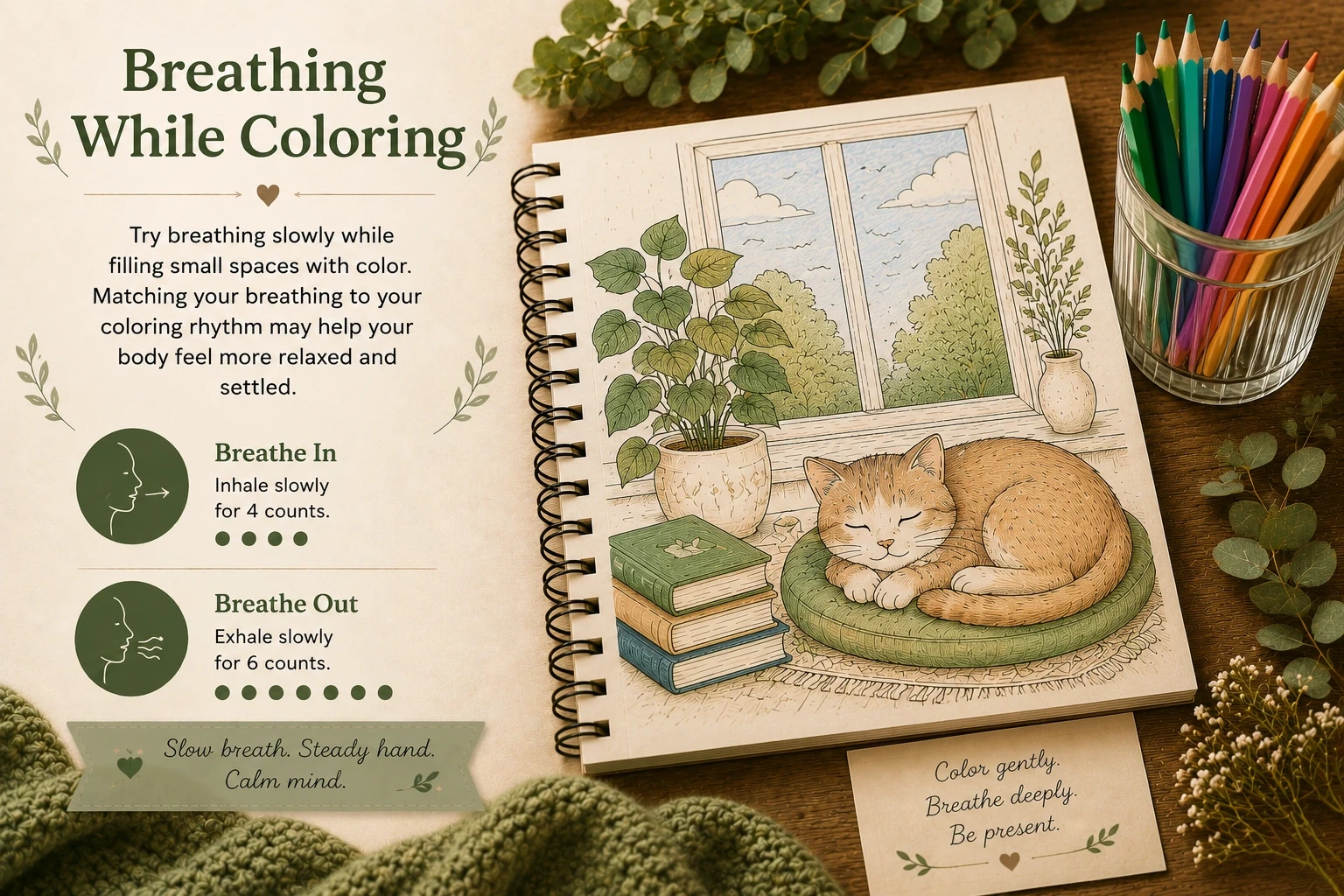
Mindful Breathing While Coloring
Try breathing slowly while filling small spaces with color. Matching your breathing to your coloring rhythm may help your body feel calmer, more grounded, and emotionally settled.
Best for: body tension, emotional overwhelm, and anxious restlessness
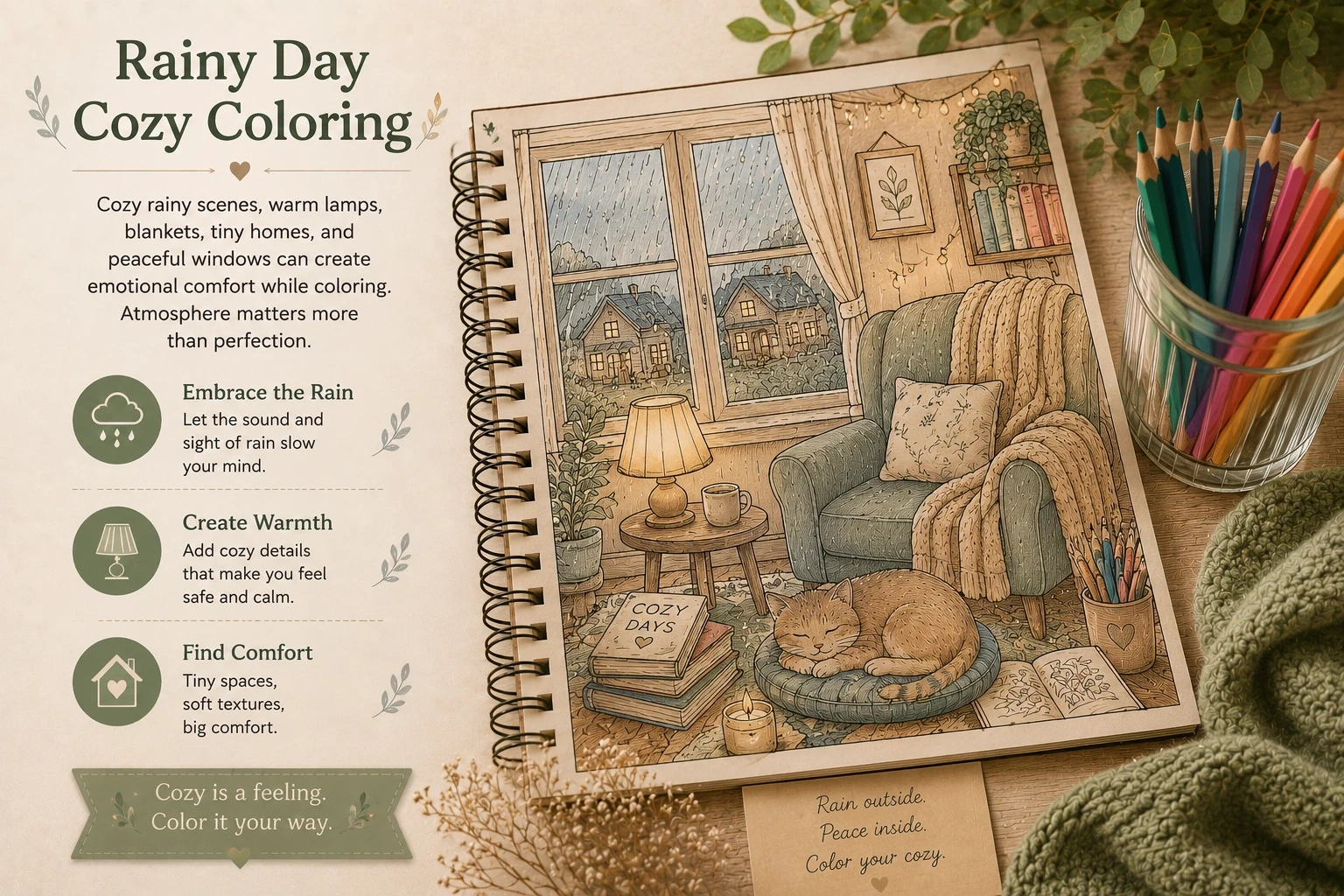
Cozy Rainy-Day Coloring Atmospheres
Cozy rainy scenes, warm lamps, blankets, tiny homes, and peaceful windows can create emotional comfort while coloring. A relaxing atmosphere often matters more than coloring perfectly.
Best for: quiet evenings, burnout recovery, and emotional comfort
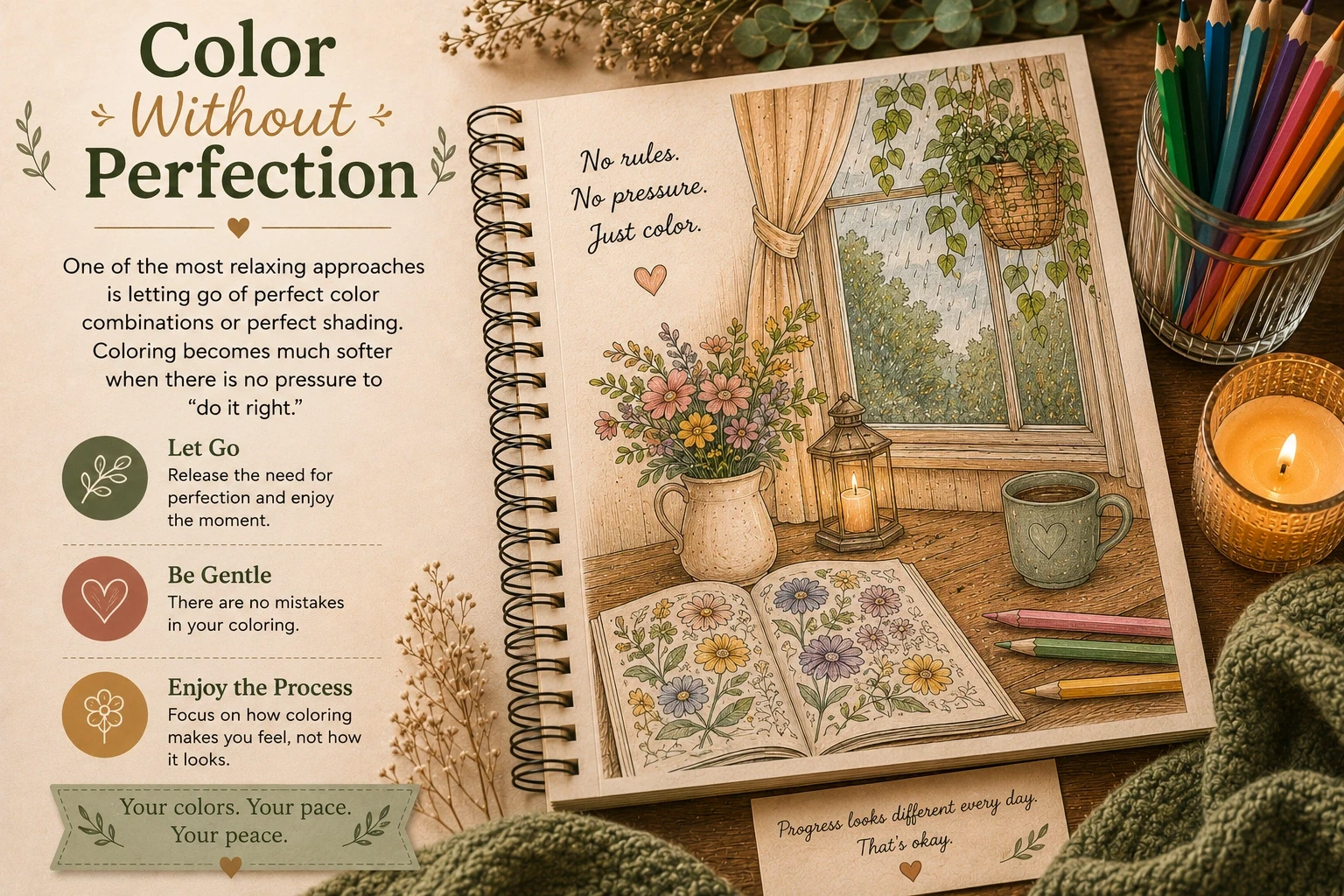
Coloring Without Perfectionism
One of the most relaxing coloring approaches is letting go of perfect color combinations or perfect shading. Coloring becomes softer and more calming when there is no pressure to do it right.
Best for: creative pressure, perfectionism, and low-energy days
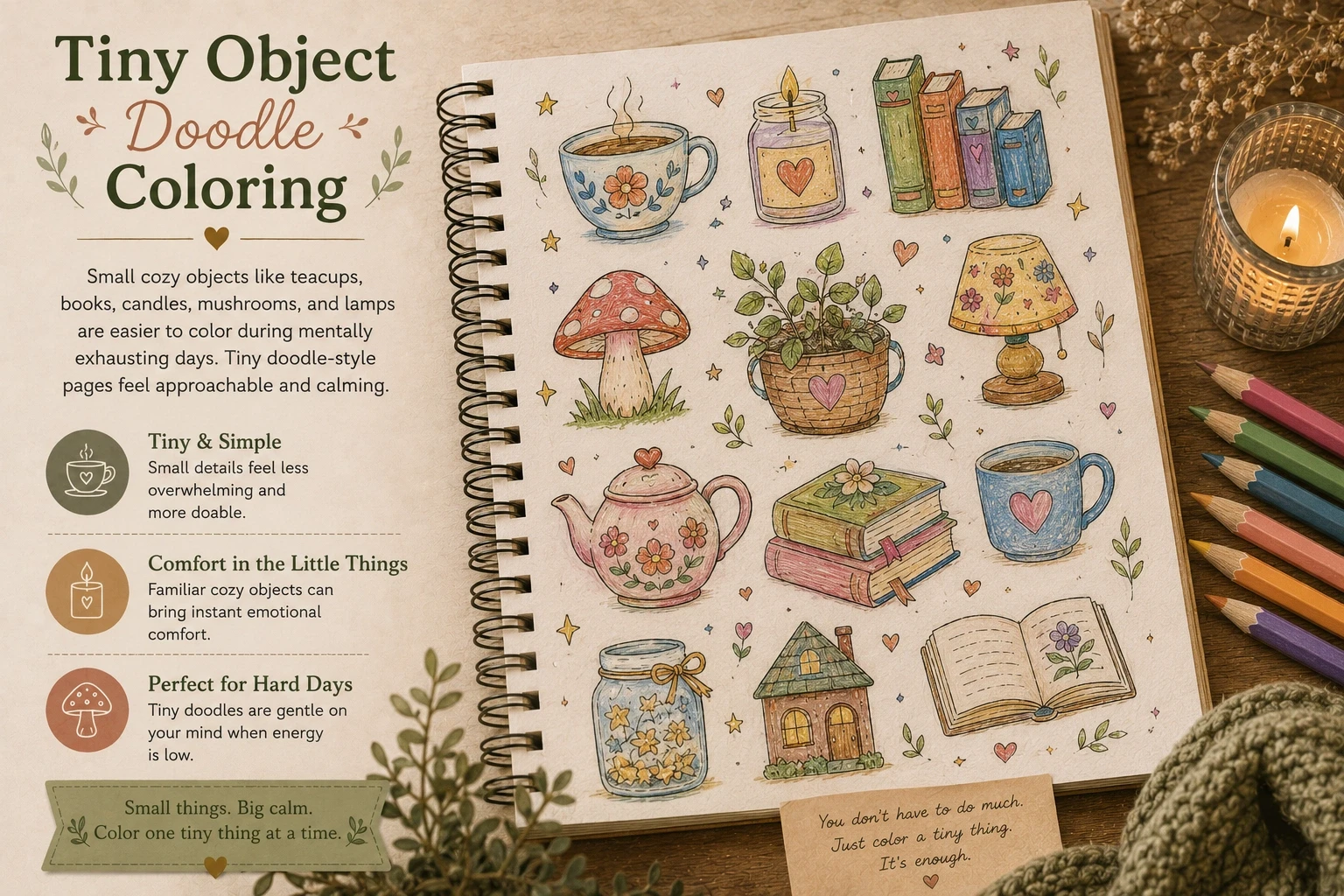
Tiny Doodle Object Coloring
Small cozy objects like teacups, books, candles, mushrooms, and lamps are often easier to color during mentally exhausting days. Tiny doodle-style coloring pages can feel approachable, gentle, and calming.
Best for: mental fatigue, short breaks, and beginner-friendly relaxation
Which Coloring Technique Should You Try First?
Use this quick guide to choose a coloring technique based on how you feel right now. This makes the activity easier to start and helps avoid decision fatigue.
| Coloring Technique | Best For | Try This |
|---|---|---|
| Slow Mindful Coloring | Racing thoughts | Color one small section slowly. |
| Soft Relaxing Color Palettes | Anxiety and visual overwhelm | Choose 3 gentle colors only. |
| Repetitive Pattern Coloring | Mental focus | Repeat one color rhythm. |
| Mindful Breathing While Coloring | Body tension | Breathe in before each stroke. |
| Coloring Without Perfectionism | Creative pressure | Use any color that feels good. |
Cozy Coloring Benefits
Why Cozy Coloring Feels So Comforting
Cozy scenes often create a sense of emotional warmth. Rainy windows, tiny lamps, books, soft blankets, warm tea, and gentle objects can help coloring feel more comforting and immersive.
During stressful moments, many people are not looking for intense concentration. They simply want something calm to focus on for a little while. That is why cozy coloring pages can work especially well for evening routines, work stress, and burnout recovery.
To go deeper into this topic, read our article on the benefits of cozy coloring books for stress relief .
Mindful Coloring for Anxiety Relief
Mindful coloring combines creativity with present-moment awareness. Instead of focusing on results, the goal is to gently return attention to the act of coloring whenever the mind begins to wander.
Many adults find coloring easier than traditional meditation because it provides a visual activity to focus on while still encouraging calmness and relaxation. You do not have to sit perfectly still, empty your thoughts, or follow a strict routine. You simply color, notice, breathe, and return.
This is one reason coloring is sometimes compared with meditation. You can read more in our article, Why Is Coloring the New Meditation?
Coloring as a Screen-Free Self-Care Activity
Screens can be useful, but they can also keep the mind alert when it is trying to rest. Notifications, videos, messages, and endless scrolling may increase mental stimulation, especially at night.
Printable coloring pages offer a slower alternative. A physical page gives your hands something to do without pulling your attention into another feed. This makes coloring a practical screen-free activity for adults who want to relax after work, reduce digital overload, or build a gentle bedtime ritual.
For best results, print one page, choose a small set of colors, place your phone away from your coloring space, and set a timer for 10 to 15 minutes. The short time limit keeps the activity easy and low-pressure.
Coloring vs Other Relaxation Activities
Many activities can help reduce stress and improve emotional well-being, but coloring offers a unique combination of creativity, mindfulness, and accessibility. Unlike some relaxation techniques that require training, equipment, or specific environments, coloring can be enjoyed almost anywhere with just a few coloring pages and pencils.
Meditation is highly effective for developing mindfulness, but many people find it difficult to quiet their thoughts when first starting. Coloring provides a gentle alternative because the hands remain active while the mind naturally focuses on colors, shapes, and patterns.
Reading can also be relaxing, especially before bed, but it often requires sustained concentration. Coloring allows the brain to engage in a slower, less demanding activity that can feel restorative after a busy day.
Exercise remains one of the most powerful stress-management tools available, yet it may not always be practical during work breaks or quiet evenings. Coloring offers a low-energy option that can still encourage relaxation, focus, and emotional balance.
Compared with scrolling social media, coloring provides a screen-free experience that reduces digital stimulation. Many adults report feeling calmer after spending twenty to thirty minutes coloring rather than using their phones during downtime.
| Activity | Stress Relief | Creativity | Screen-Free | Easy to Start |
|---|---|---|---|---|
| Coloring | ★★★★★ | ★★★★★ | ✓ | ✓ |
| Meditation | ★★★★★ | — | ✓ | Moderate |
| Reading | ★★★★☆ | ★★★☆☆ | ✓ | ✓ |
| Exercise | ★★★★★ | ★★☆☆☆ | ✓ | Moderate |
| Social Media | ★★☆☆☆ | ★☆☆☆☆ | ✗ | ✓ |
The best relaxation activity is the one you enjoy and can practice consistently. For many adults, coloring combines mindfulness, creativity, and convenience in a way that makes it easy to turn into a healthy daily habit.
Color While You Think
Some of the most relaxing coloring moments happen when there is no goal at all. Quietly coloring tiny cozy objects while listening to music, thinking, or resting after a long day can feel surprisingly peaceful.
You do not need to finish a page perfectly. You do not even need to finish it at all. Sometimes a few calm minutes are enough. Coloring becomes more useful when it feels gentle, repeatable, and easy to return to.
Ready to Practice These Coloring Techniques?
Download the free printable coloring pages and start applying these stress relief coloring techniques today. Each page was selected to support mindfulness, relaxation, and cozy self-care moments.
Get the Free Coloring PDFHelpful Answers
Frequently Asked Questions
Can coloring reduce stress?
Many people use coloring pages as a relaxation activity because they encourage focus, creativity, repetitive movement, and mindfulness. Coloring is not a medical treatment, but it can be a helpful self-care habit during stressful days.
Are coloring books good for anxiety?
Coloring books may help some people manage anxious thoughts by encouraging mindful attention and reducing mental clutter. The most helpful pages are usually simple, cozy, and low-pressure.
What colors are most relaxing for coloring pages?
Soft blues, sage greens, dusty pinks, lavender tones, warm neutrals, and earthy colors are often associated with calmness and relaxation.
How long should I color to relax?
Even 10 to 15 minutes of coloring can help create a calming break during a busy day. You do not need to finish the whole page to receive the benefit of a quiet pause.
Can coloring help with burnout?
Many people use coloring as part of burnout recovery routines because it provides a low-pressure creative activity that encourages slowing down and taking a break from daily responsibilities.
Are printable coloring pages better than digital coloring?
Many adults prefer printable coloring pages because they reduce screen time and provide a more tactile, mindful experience with pencils, markers, and paper.
Cozy Stress Relief Starter Pack
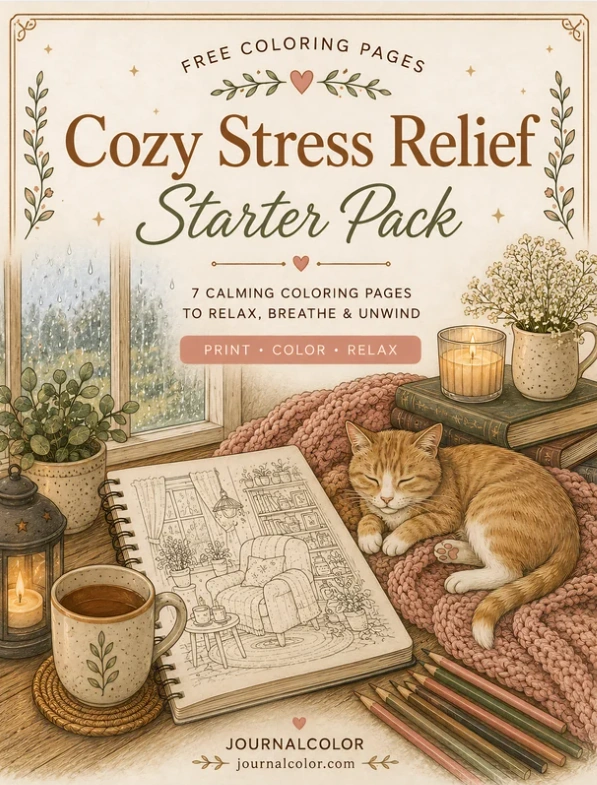
Download 7 calming printable coloring pages designed for stress relief, mindfulness, cozy evenings, and relaxing creative moments. Use them with the techniques in this guide to create a simple, screen-free relaxation ritual.
- ✔ Instant free PDF download
- ✔ Cozy relaxing illustrations
- ✔ Perfect for stress relief and anxiety calming
- ✔ Printable A4 + US Letter format